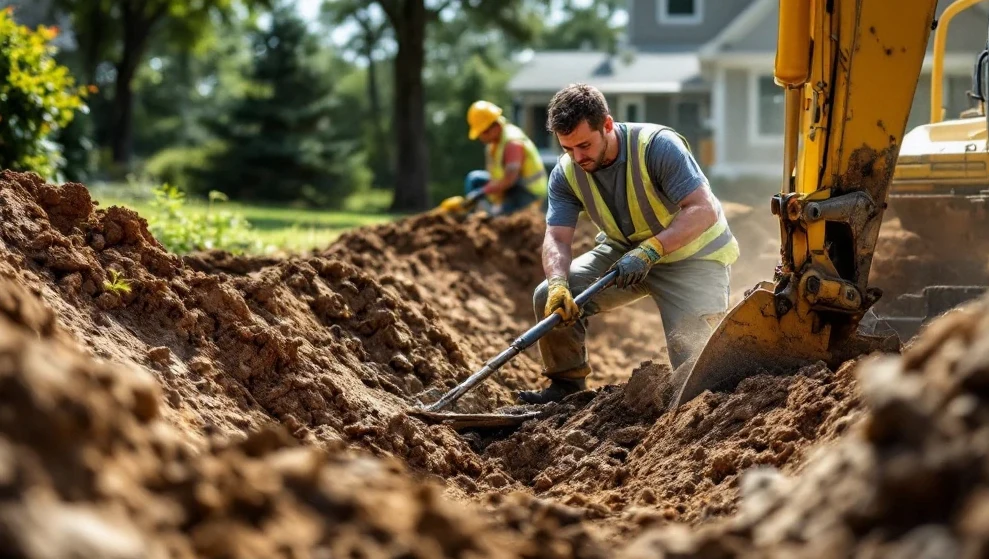
What is Excavation Services and how does it work?
Excavation services move earth to shape your property: digging foundations, grading yards, clearing land, or installing drainage. For a Birmingham home, it starts with a site walk to spot soil, utilities, and slope, then heavy equipment does the cutting and filling to your specs.
Think of excavation as the heavy lifting behind any project that touches the ground. If you're adding a room, the footings need a trench. If water pools in your backyard every storm, the grade needs to change. If you're building a driveway or a pool, the pad has to be level first. That's what we do, and it's almost always the first trade on the job.
The process sounds simple, but the details matter. We walk the property first, check the soil type, look for buried utilities, and figure out where water naturally flows. Then we bring in the right machine, whether that's a mini excavator for tight spaces or a full-size backhoe for open ground. We cut where the grade needs to drop, fill where it needs to rise, and compact everything so it doesn't settle later.
Most residential excavation in Birmingham runs $1,500 to $6,300, depending on the size and complexity of the job. (angi.com) That range covers everything from a simple grading fix to a full foundation dig. The only way to know your number is a site visit, because soil and slope change everything.
One thing homeowners often miss: excavation isn't just digging a hole. It's about the finished grade, drainage, and stability. A poor grade sends water toward your foundation, and a loose fill settles into dips. We shape the land so the next step, whether that's concrete or sod, has a solid base.
- Foundation trenches and footings
- Land clearing and lot grading
- Driveway and patio base prep
- Drainage swales and French drains
- Pool and pond excavation
- Utility trenching for water, sewer, or power
Short version
- Excavation shapes your land: digging, grading, and compacting.
- Costs typically land between $1,500 and $6,300 for Birmingham homes.
- Soil type and slope drive the final price, so a site visit is the only accurate quote.
- Good excavation prevents drainage problems and foundation issues later.
How Excavation Services works, start to finish
A typical excavation job follows a clear sequence: site walk, utility locate, grading plan, digging, compacting, and final inspection. Each step builds on the last, and missing any one of them leads to callbacks.
We start with a site walk, not a phone estimate. That's where we see the slope, the soil, and the obstacles. Clay soil drains poorly, sandy soil shifts easily, and rocky ground slows every bucket. We also check for trees, fences, and existing structures that limit machine access.
Next comes the utility locate. We call the local one-call service so every buried gas, water, and power line gets marked. This isn't optional. Hitting a line is dangerous and expensive, and it's the kind of mistake that turns a $3,000 job into a $10,000 repair. We wait for the marks before any machine starts.
Then we agree on the grade. For a foundation, that means digging to the depth your engineer specified. For drainage, we cut a swale that carries water away at a steady slope. We use laser levels to get the numbers exact, because a quarter-inch per foot matters over a long run.
The digging itself is the fastest part. A skilled operator can move a surprising amount of earth in an hour. The slower work is the finishing: hand-trimming edges, compacting the base in lifts, and shaping the final surface so water sheds off. Compaction is where most cheap jobs cut corners, and it's why their patios crack and their driveways dip.
We finish with a walk-through. You see the grade, we point out where the water will flow, and we answer questions. If the project needs a final inspection, we schedule it and stay until it passes. That's the job, start to finish.
- Walk the site.We check soil, slope, and access. You tell us the goal, and we spot the challenges.
- Mark utilities.One-call locates every buried line. No machine moves until the ground is marked.
- Set the grade.We measure and stake the cut and fill lines so the final surface drains correctly.
- Dig and move earth.The machine does the heavy work, cutting high spots and filling low ones.
- Compact and finish.We compact in layers, then hand-trim edges and shape the final grade.
- Walk through.You see the result, we explain the drainage, and we handle any inspections.
Why Excavation Services matters for your home
Excavation sets the stage for everything built on your land. Get the grade wrong and water runs toward your foundation. Get the base loose and concrete cracks. Get the slope right and your yard stays dry for decades.
Birmingham sits on red clay in many neighborhoods, and clay holds water like a sponge. That's why drainage is the number one reason we get called. A yard that slopes toward the house sends every rainstorm against the foundation, and over time that causes cracks, seepage, and bowing walls. Fixing the grade is far cheaper than repairing a foundation.
Excavation also protects the work that comes after it. A concrete patio needs a compacted base, or it settles and cracks within a year. A driveway needs a stable subgrade, or it dips and potholes. A retaining wall needs a proper footer, or it leans. We build the base that keeps those investments solid.
Then there's the practical side. If you're adding a garage or a room, the foundation has to sit at the right depth and elevation. We dig to the engineer's specs, and we make sure the surrounding grade drains away from the new walls. That's not extra work; it's the work.
The cost of excavation reflects that importance. In Birmingham, excavating land runs $20.64 to $38.08 per cubic yard, including materials and labor. (handoff.ai) That's a small price compared to the cost of fixing a water problem or a cracked slab later. Most projects land in the $1,500 to $6,300 range, which is a fraction of what a foundation repair costs. (angi.com)
A day of grading now saves a decade of wet basements and cracked driveways.
Common problems and what causes them
The most common excavation problems are poor drainage, settling fill, and damaged utilities. Each has a specific cause, and each is avoidable with the right process.
Poor drainage tops the list. It happens when the final grade slopes toward the house or holds water in low spots. The cause is usually a rushed grading job that didn't check the slope with a level. We always walk the grade after finishing, and we use a laser to confirm the fall.
Settling fill is the second issue. When soil is dumped in a thick layer and not compacted, it settles over time. That's why a new driveway can develop a dip in the middle. The fix is compaction in lifts, meaning we spread the fill in thin layers and compact each one. It takes longer, but it doesn't move later.
Damaged utilities happen when someone digs without a locate. We've seen it happen on other jobs, and it's always a mess. A severed gas line or water main costs thousands to repair and can shut down a block. That's why we always do the locate, and why we hand-dig near marked lines.
Soil type matters. Normal topsoil or loam costs $50 to $100 per unit to excavate in Alabama, while sandy soil runs $45 to $85 per unit. (costflowai.com) Clay is harder to work and drains poorly, which is why we often recommend adding drainage tile or amending the soil. The multiplier for normal soil is 1.25 times the base rate, which reflects the extra effort. (costflowai.com)
Minor settling
A small dip in the yard after a few months is normal. Watch it, and if it grows, call us to add fill.
Water pooling near the foundation
This is a warning sign. If the grade is wrong, water is working on your foundation. Fix it before the next rainy season.
Cracks in new concrete or a leaning wall
That means the base wasn't compacted. Don't wait; the movement will continue. We can underpin or re-grade before it gets worse.
Frequently Asked Questions
How much does excavation cost for a typical Birmingham home?
Most residential excavation projects in Birmingham cost between $1,500 and $6,300. (angi.com) The exact price depends on the size of the job, the soil, and how much earth has to move. A small grading fix might land at the low end, while a full foundation dig with lots of fill will be closer to the high end.
What is the cost per cubic yard for excavation in Birmingham?
Excavating land in Birmingham, including materials and labor, ranges from $20.64 to $38.08 per cubic yard. (handoff.ai) That range covers different soil types and site conditions. The only way to get a precise number for your yard is a site visit.
Do I need a permit for excavation on my property?
Often, yes. Birmingham and surrounding areas require permits for structural excavation, like foundations, and sometimes for large grading projects. We handle the permitting as part of the job, but it's your responsibility to check with your local building department if you're doing it yourself. We always pull the necessary permits before we start.
How long does an excavation project take?
A typical residential job takes one to three days. A simple grading fix might be done in a few hours, while a foundation dig with significant fill and compaction can take two or three days. Weather and soil conditions can stretch that, but we give you a time estimate before we start.
What's the difference between excavation and grading?
Excavation is the general term for moving earth, which includes digging, trenching, and clearing. Grading is a specific type of excavation that shapes the surface to a desired slope. So, grading is a subset of excavation. When we talk about fixing drainage, we're talking about grading.
Can you excavate near my foundation without damaging it?
Yes, if we're careful. We use smaller equipment or hand-digging near foundations to avoid undermining the footing. We also shore up trenches when needed. The key is knowing the depth of your foundation and the soil conditions. We assess that on the site walk and plan accordingly.
What kind of soil do you typically find in Birmingham?
Most of Birmingham sits on heavy clay, which drains poorly and expands when wet. That's why drainage is so important here. Sandy soil is less common but shows up near creeks. The soil type affects the cost and the approach. Normal soil excavation in Alabama runs $50 to $100 per unit, while sandy soil is $45 to $85 per unit. (costflowai.com)
Do you handle utility locating before you dig?
Yes, always. We call the one-call service to mark all buried utilities before any machine starts. This is a legal requirement and a safety necessity. Hitting a gas line or water main is dangerous and expensive, so we never proceed without this step.
What happens if it rains during my excavation project?
Rain can turn a graded site into mud and delay compaction. We monitor the forecast and will pause if heavy rain is coming, especially if we've opened a foundation trench. We also shape the site to shed water even mid-project, so we're not working in a puddle. A short delay is better than a ruined base.
Can you excavate a small backyard with limited access?
In most cases, yes. We have compact excavators that fit through a standard gate, and we can hand-dig in tight spots. The tradeoff is time, which affects the cost. A narrow access means more manual work, but we'll get the job done. We'll let you know if access is a problem during the site walk.
Sources
Need excavation services in Birmingham? Get a free estimate today.
📞 256-857-3227